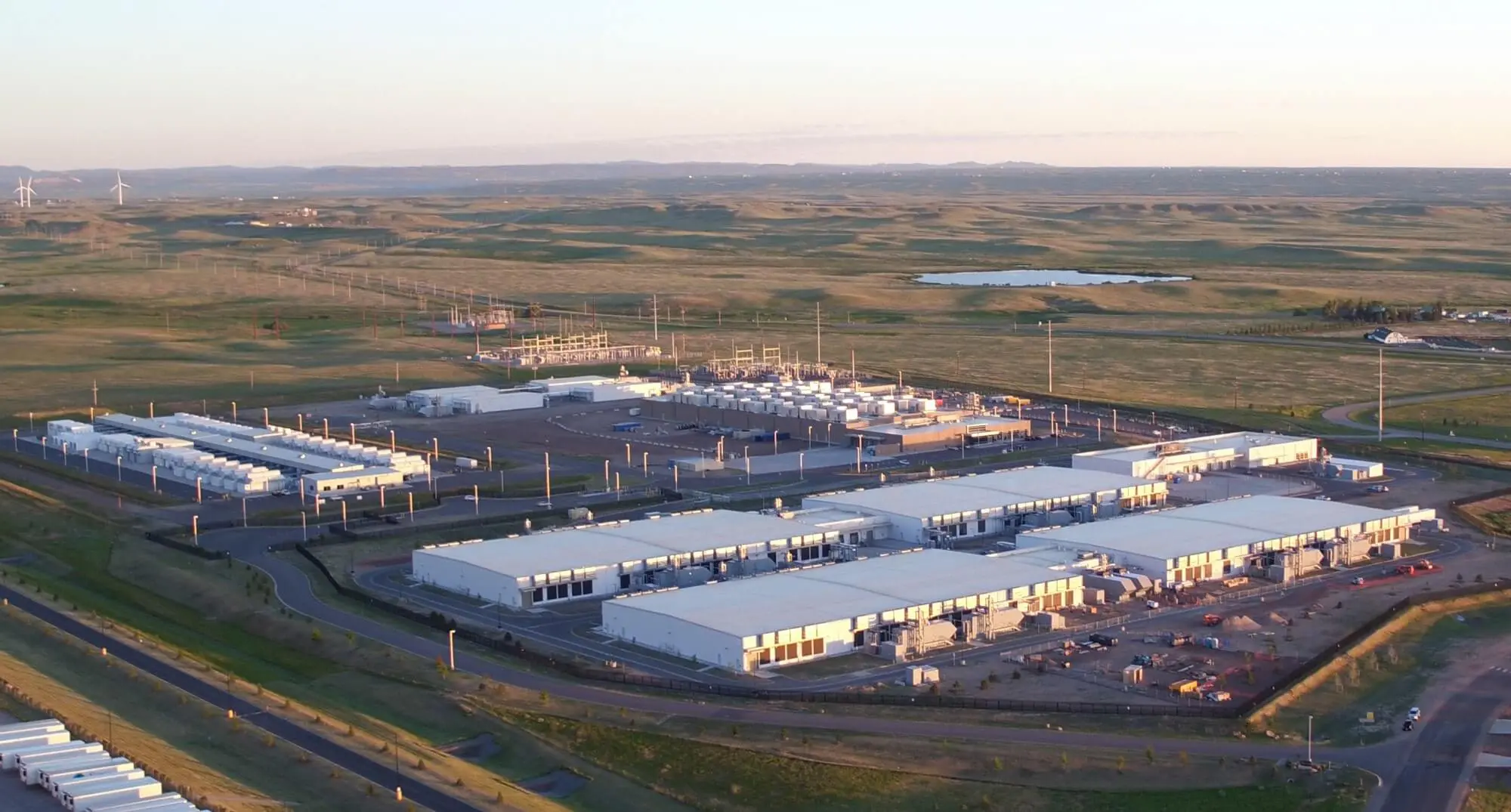
Johannesburg, South Africa – South Africa is establishing itself as a significant player in the global artificial intelligence (AI) landscape, boasting four AI-focused data centres, a figure that surpasses the combined total of Taiwan and the Netherlands. This places the nation among the top 13 globally in terms of AI compute regions, according to a recent study by Oxford University researchers Zoey Hawkins, Vili Lehdonvirta, and Boxi Wu, titled “AI Compute Sovereignty: Infrastructure Control Across Territories, Cloud Providers, and Accelerators.”
The study highlights South Africa as the sole African nation possessing these critical AI infrastructure facilities. AI compute data centres, essential for housing the computational resources required to run and train AI models, are categorised into two types: training-relevant regions, which feature high-powered Graphics Processing Units (GPUs) like the Nvidia H100 or Google Trillium for AI model training, and inference-relevant data centres, equipped with GPUs such as the Nvidia V100 for running AI models. Training accelerators demand more computational power and are consequently more expensive, as evidenced by Meta Platforms’ reported acquisition of 350,000 Nvidia H100 GPUs at approximately $30,000 (R533,433) each in early 2024. Inference-relevant GPUs, while less computationally intensive for training, are often more memory-intensive to handle the demands of running AI models.
According to Hawkins et al., South Africa currently operates two data centres capable of AI model training and two dedicated to AI inference.
Globally, South Africa trails AI superpowers like the US (26 facilities) and China (22 facilities). However, it holds its own against other developed nations, with Germany and Singapore ranking third and fourth with seven and six facilities, respectively. India, the UK, and France each possess five AI data centres. South Africa is on par with major global players such as South Korea, Japan, Italy, and Australia, all of which also have four AI compute facilities. Notably, this is more than manufacturing powerhouses in the GPU supply chain, the Netherlands (2) and Taiwan (1), which are home to ASML and TSMC respectively.
While South Africa’s position is strong within this elite group, the study underscores a significant disparity across the rest of the African continent, which lacks similar AI compute facilities. A parallel trend is observed in South America, where only Brazil and Chile collectively host three such facilities.
Vukosi Marivate, the University of Pretoria’s ABSA Chair of Data Science, emphasised the broader implications of this technological divide, stating, “This divide isn’t just about technology. It means limited innovation, lost competitiveness, brain drain, lack of data sovereignty, and the economic benefits of AI flowing elsewhere.” Adding to this, the Oxford study points out that all of South Africa’s AI data centres are owned by foreign service providers, with three originating from the US and one from China – a trend largely mirrored globally, where US companies dominate ownership.
Tech Giants Pour Billions into South African AI Infrastructure
In a testament to South Africa’s growing importance in the AI landscape, several international tech giants have recently announced substantial investments in the country’s artificial intelligence infrastructure, collectively amounting to billions of rands.
Microsoft President Brad Smith, during a March press briefing in Sandton, outlined the three primary layers of AI: infrastructure, model, and application. “You build the infrastructure so that people will build AI models, you use the models to build applications, and when you use the applications, then you can expand further,” Smith explained. He announced a significant R5.4 billion investment by Microsoft to expand its data centre footprint in South Africa, building upon an existing R20.4 billion infrastructure commitment. A portion of this investment will also fund an initiative to provide 50,000 individuals with access to AI courses and Microsoft certifications in areas such as AI fluency, AI engineering, AI systems design, cloud architecture, and cybersecurity.
Weeks later, Google officially inaugurated its Johannesburg cloud region, marking the search giant’s first such facility in Africa. While Google did not disclose the exact investment figure, data management company Tregter estimated its value at R2.5 billion. It should be noted that this infrastructure had been operational for approximately a year prior to the official announcement.
Further bolstering the nation’s AI capabilities, Cassava Technologies, the parent company of Africa Data Centres, recently unveiled plans to invest in AI infrastructure in South Africa. In late March, the London-based company announced its intention to establish Africa’s first AI factory by upgrading its data centres with Nvidia AI computing technology. Cassava confirmed that this Nvidia-powered computing and AI software will be initially deployed at Africa Data Centre facilities in South Africa, with subsequent rollouts planned for data centres in Egypt, Kenya, Morocco, and Nigeria.
These significant investments by global tech players underscore South Africa’s strategic position as an emerging hub for AI development and deployment on the African continent, with the potential to unlock substantial economic benefits and foster innovation.