Pretoria: South Africa’s borders and points of entry are entering a new era of surveillance with the deployment of cutting-edge technology, including drone swarms and body-worn cameras. The Border Management Authority (BMA) unveiled its hi-tech arsenal this week, promising a significant clampdown on illegal crossings and corruption just in time for the busy Easter long weekend.
Home Affairs Minister Dr Leon Schreiber, addressing the media, hailed the move as a “big step forward” in securing the nation’s porous boundaries. Spearheading the technological push are four advanced quadcopter unmanned aerial vehicles (UAVs) and an initial batch of 40 body-worn cameras, set to be operational at key ports of entry.
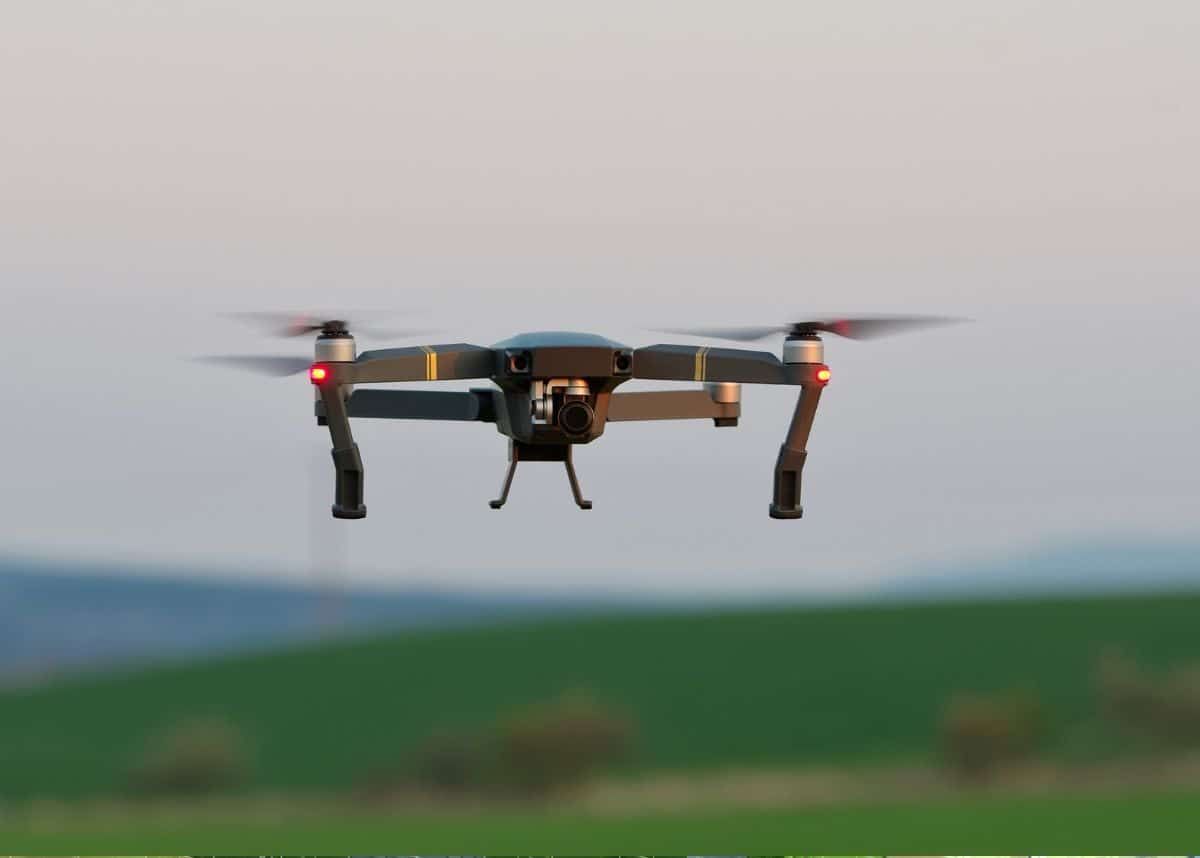
These are not your average hobby drones. Equipped with sophisticated night vision cameras incorporating thermal detection technology, these aerial sentinels are powered by Artificial Intelligence (AI). They possess the ability to autonomously identify and lock onto heat signatures, tracking moving people or vehicles with unnerving precision. Capable of speeds up to 43 kilometres per hour, these drones can even navigate remote rural terrains without GPS and, remarkably, operate underground, according to the Department of Home Affairs.
Nonhlanhla Mthembu, an instructor at Ntsu Drone Academy, detailed the impressive capabilities of these aerial eyes. With a flight ceiling of 7,000 metres, the drones boast two powerful cameras: a zoom lens with a 20km range and a thermal imaging camera for nocturnal operations. The AI onboard allows for real-time object identification and classification, coupled with automatic tracking. A laser rangefinder provides precise distance calculations and coordinates of any target.
The initial trials of drone technology over the recent festive season yielded staggering results. “Data shows that when we first trialled the use of drones over the festive season, the number of attempted illegal crossings that were successfully prevented, increased by 215%,” revealed a confident Dr Schreiber. This success has paved the way for the permanent, full-time deployment of this advanced technology.
The BMA is investing in local expertise, training eight officers to become expert drone pilots who will operate the devices on a rotational basis across various ports of entry nationwide.
Adding another layer of scrutiny are the body-worn cameras, demonstrated by Sujo Mulamattathil, Managing Director of Sparcx. These devices can record up to 16 hours of continuous voice and video, complete with GPS coordinates. In a significant integration, the cameras can be linked to the drones, allowing for rapid aerial deployment to the location of an official pressing a panic button. Crucially, all data captured by these body cameras will be securely stored in a dedicated Digital Evidence Management System, ensuring its admissibility in court for potential prosecutions.
Dr Schreiber issued a stark warning to those contemplating illegal border crossings and smuggling activities: “Our message to would-be illegal immigrants and smugglers is clear. We are now watching the borderline during the day, we are watching at night, we can see your body heat wherever you try to hide, and we will catch you. As we roll out more and more cutting-edge technology, there are fewer and fewer places to hide for criminals who undermine our national security.”
Beyond border security, the body cameras will also serve as an internal watchdog, deployed to officials within ports of entry to detect and deter corruption, while simultaneously monitoring their efficiency.
BMA Commissioner Dr Micheal Masiapato revealed that the substantial investment in this technological upgrade, including the drones, cameras, prison carrier vans, port health vehicles, and harbour patrol speedboats, was funded by the Criminal Assets Recovery Account (CARA). While the BMA initially requested R500 million, they were allocated R150 million, which has been strategically deployed through procurements managed by Armscor. Notably, the South African Police Service is also set to pilot 100 body-worn cameras at a cost of R15 million in the coming year.
Looking ahead, Dr Schreiber provided an update on the ambitious plan to overhaul six of South Africa’s busiest land ports of entry through public-private partnerships. “There should be within the next few weeks an announcement of the redevelopment of the six biggest land ports of entry in South Africa and they will be done through a public private partnership. So that process is well advanced and that too is going to be an enormous step forward for us,” he stated. This physical reconstruction will be integrated with the “one-stop border post” concept, aimed at significantly speeding up border movements once the enabling bill is passed in Parliament.
The deployment of this sophisticated technology signals a clear intent to tighten South Africa’s borders, sending a strong message to criminals and promising greater efficiency and accountability within the BMA itself. The era of relying solely on boots on the ground is seemingly drawing to a close, replaced by a digital eye in the sky and on the ground.